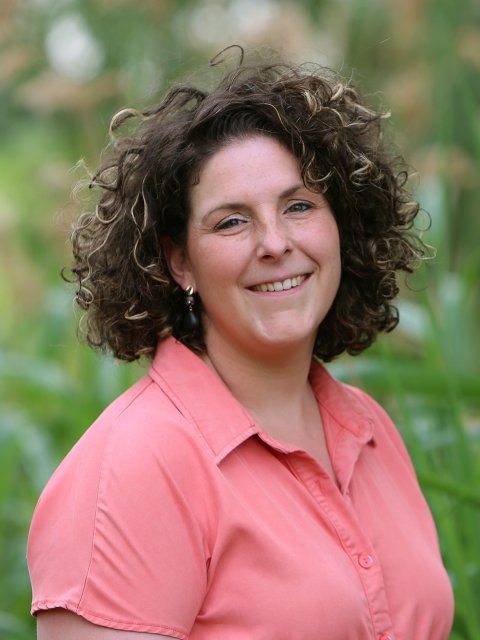
Alderman M.A.A. (Marieke) van den Boom-Witzel

Portfolio Space

  • Spatial policy and spatial planning
    • environmental law, environmental vision, infrastructure and spatial planning, and housing vision
    • zoning plans, spatial substantiations, and environmental permits
  • Sand extraction and excavation
  • Preservation of monuments and (underground) archaeology
  • Public housing
  • Sustainability
    • approach policy sun, wind, heat transition, RES, commissioning Regional Energy Desk
  • Environment
  • Economic affairs
  • Recreation and tourism

Commissioning partnerships

  • Rivierenland Environmental Agency
  • Implementing organization Rivierenland Broadband Network
  • Recreation Authority Lower Rhine and Waal

Project/coordination portfolio holder

Refugee Reception

Portfolio exclusion

The topics in this portfolio concerning Ruivertweg in Dreumel and housing construction on Schoenmakersstraat in Boven-Leeuwen belong to the Control and Public Facilities portfolio.

Temporary replacement of portfolio by Alderman E.J. (Evert Jan) Slootweg

Contact information

Additional functions

Not paid

  • Member of MR partnerships Mariënhof/St. Lambertus
  • (Sole) shareholder M. Witzel Holding B.V.

Columns

Living with water, February 2025

It has been exactly 30 years since, as an 8-year-old girl, I saw the water of the Meuse River in our backyard. While many older people now say that February 1995 was an exciting time because they had to leave their homes behind, I only think back on it with a smile. The neighborhood children and I built a raft. We floated around for hours between the playhouse, trees, and soccer goal. Until the water got too high and the raft threatened to go over the garden fence. Then we had to abandon ship.

The Land of Maas and Waal has previously experienced major flooding.

Many of us still remember the high water of 1995. But of course, this was nothing compared to the flood disaster of 1926. On the morning of December 31, 1925, the dike near Overasselt broke. As a result, the entire Land van Maas en Waal was flooded. To prevent further damage, dike reeve De Leeuw decided to blow up the dike in Dreumel. This allowed the water to flow back into the Meuse. No lives were lost during the flood itself, but the water caused a great deal of damage in an already poor area.

It is an event that virtually none of us have experienced.

But it is definitely part of our history. And there are still little things that remind us of it.
Just think of the Dijkgraaf de Leeuwweg and the flood-damaged houses that are still standing there. But also the mentality that we have as Maas and Walers.

It's time to show ourselves

While The Hague is now discussing the 'Soil and Water Steering' guidelines, we are used to nothing less. We know what it's like to live with water. That is why the five municipalities affected by the 1926 flood disaster (Heumen, Wijchen, Beuningen, Druten, and West Maas en Waal) have joined forces. Together, we will commemorate what happened next year and show what it has brought us. But even more importantly, together we will show how we are facing the future with water. Because where better to show how to live with water than in the Land van Maas en Waal?

Marieke van den Boom-Witzel
alderman

The apple doesn't fall far from the tree, May 2025

It is not often that we in West Maas en Waal receive visitors from The Hague. So when State Secretary Rummenie from the Ministry of Agriculture, Fisheries, Food Security, and Nature (LVVN) came to the region, we seized the opportunity to show him what our municipality has to offer and what we are working on. And although I believe that we live in the most beautiful place in the Netherlands, on that day I was particularly proud of the new generation of Maas and Waal entrepreneurs who presented themselves.

The successors flew out of the starting blocks

The Secretary of State and his entourage were welcomed at Bloemenpark Appeltern. Of course, Ben van Ooijen couldn't resist sharing his passion and persuading the State Secretary to pose for a photo among the tulips. But he soon confidently handed over the baton to his son Bart, who conveyed the beauty of the park to his guests with at least as much passion and knowledge. He also shared his vision of the future, where the park is headed and what is needed to get there.

Thinking in terms of opportunities and innovation

When we talk about the agricultural sector, we often talk about livestock farming and agriculture. But it is not without reason that we are located in the Fruit Delta of the Netherlands. Luuk Tijssen is aware of the challenges facing the sector, but at the same time, he is not deterred from taking over his father's fruit farm in Altforst. At a time when we see that the Netherlands needs to become self-sufficient in food, fruit is an important source of nutrition. Luuk represents a new generation of growers who, with the help of innovation, can produce more, healthier, and more affordable fruit. As a highlight, he had the Secretary of State fly a drone over the pear orchard to scan each tree individually and thus treat each tree separately.

The future belongs to the young

If this is the new generation that will keep the economy in West Maas en Waal running, then we can rest assured. In any case, they have certainly put our municipality on the map.

Marieke van den Boom - Witzel
alderwoman

Heat wanted: September 2025

Last summer, I was in France with my family. I really enjoy those beautiful little French villages. This year, a question arose that I still don't have an answer to: how would all these houses be disconnected from the gas grid? A question that came up because we are taking important steps in that direction in West Maas en Waal.

We must phase out gas by 2050

That is a national agreement, which we as a municipality must implement. In my view, the government is responsible for supplying utilities such as gas, water, and electricity. But the new way of heating homes in the future is a local responsibility.

But where do you start? 

We have started investigating the options for disconnecting homes from the gas grid. If we switch to electric heating in every home, we will have a problem, because there is not enough electricity to power it all. This means that we will explore the possibility of installing a district heating network. Research shows that the best option for this within our municipality is north of Zandstraat and west of Molenstraat. There are enough homes there to see if we can build a good system to heat the homes using water from the Waal river and heat from a large company.

We really need our residents' help with this.

This brings us to the front doors of our residents. After all, the warmth must also be brought inside the homes. That is why we started with our residents. In recent weeks, municipal employees have visited 700 homes to explain the plans. And to ask if they would like to join us. To my great delight, many residents have indicated that they want to take on this challenge together with us. This is a very important step. Because without the involvement of our residents, there is no chance of success. And when our residents think and act together with us like this, it warms my heart as an alderman.  

Marieke van den Boom - Witzel
alderwoman