The Maas and Waal rivers flow
The Maas and Waal rivers flow
December 31, 2025, marks the 100th anniversary of the major flood that struck the Land van Maas en Waal. The Maasdijk between Overasselt and Nederasselt broke, flooding the entire area. Fortunately, there were no casualties, but the damage and impact were significant.
Now, a century later, the five municipalities in this area—Beuningen, Druten, Heumen, West Maas en Waal Wijchen—are marking this special milestone by joining forces to launch a valuable initiative: Maas en Waal Flows.
What is Maas en Waal Stroomt?
The “Maas en Waal Stroomt” program is more than just a commemoration. It is a movement we are launching to strengthen our unique region—one that shows how water both connects and challenges us. Together with residents, businesses, schools, organizations, and partners, we want to explore how water has shaped our past, influences our present, and determines our future.
"Maas and Waal Flows" takes you on a journey through the past, present, and future. Through various projects and activities, you’ll experience how water shapes and connects our region.
Activities of the Watersnood26 Working Group
Maas en Waal Stroomt works closely with the Watersnood26 working group of the Tweestromenland Historical Society. This working group offers a diverse program of activities throughout the Maas en Waal region, ranging from theater performances and exhibitions to a Watersnood Marathon.
On this page, we highlight a few of them. You can find more information about the activities and registration on the Watersnood26 website at . New activities are added to the program on a regular basis.
Come admire the Beacons of Hope—only in October!
You may see them regularly along our dikes: the old dike warehouses. But do you know what these buildings were used for in the past? In October, we’re shining a spotlight on 11 additional dike warehouses. Discover their unique stories and check out the “Beacons of Hope.”
In October, the 11 dike warehouses stand out even more
The dike warehouses will be temporarily marked with eye-catching signage, making them clearly visible to residents and visitors. The project is called “Beacons of Hope.” The dike warehouses serve as a silent reminder of our struggle against the water. The project is part of the “Maas and Waal Flow” program. House of Thol from Overasselt created the design.
The design takes nature and historic sites into account
The dike warehouses are national historic landmarks. They are also located in or near a protected nature area. For this reason, the design takes both the buildings and the natural environment into account. The markings are made of natural materials.
In the past, materials for dike maintenance were kept here
The dike warehouses used to play an important role during floods. For example, tools, sandbags, and oil lamps were kept there, ready for use.
The buildings remind us of life with water. They show how people worked together to keep the area safe.
You'll find the dike warehouses at 11 locations
You can view the dike warehouses in:
- Alphen, Kerkdijk 5
- Appeltern, De Tuut 19
- Beuningen, 41 Dyke
- Deest, Waalbandijk 62
- Dreumel, Vluchtheuvelstraat 14
- Ewijk, 7 Dyke
- Maasbommel, Bovendijk 2a
- Nederasselt, Maasdijk 9
- Weurt, 5 Dyke
- Niftrik, Ravensteinseweg 521
- Winssen, Dyke 7
Come see it in October and discover the story. The Beacons of Hope are on display only this month.
Free model-building sheet
Thanks to the involvement of a local resident, a free model-building kit of a dike warehouse is now available at . We would like to extend our heartfelt thanks to Edward Paijmans for this wonderful initiative, which allows people of all ages to get involved. It contributes to our narrative and helps educate the public about the historical function of these distinctive structures.
October is History Month
History Month takes place every October. Throughout the Netherlands, there are activities centered on history and heritage. This is a fun and accessible way to learn more about the past.
So this month, come admire the “Beacons of Hope” and discover a special piece of the history of Maas and Waal.
This project was made possible in part by

“Hydropower” Exhibition at the Tweestromenland Museum
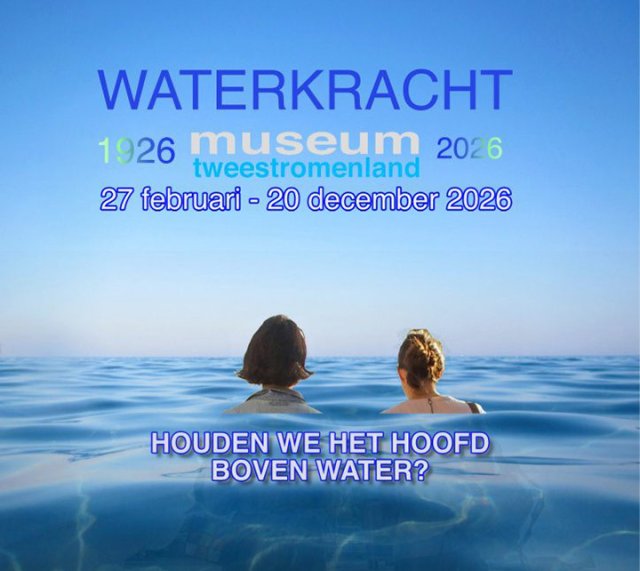
Are we keeping our heads above water? That question is at the heart of the interactive exhibition “Water Power” in Beneden-Leeuwen. Every month, there’s an additional activity—such as a lecture, film, or debate—to get you thinking about water issues. The exhibition runs through the end of December 2026.
For more information, visit the Museum Tweestromenland website at .
Exhibition “The Wild Water” at Wijchen Castle Museum
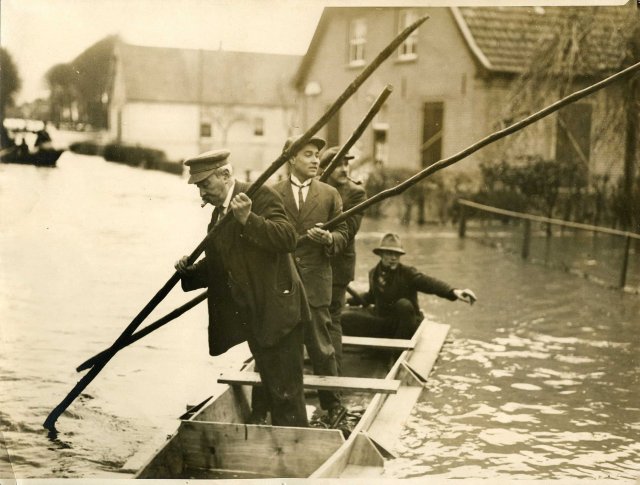
Discover stories from the villages that were flooded in 1926. Through diaries, letters, photographs, and a film, you’ll see how the entire country rallied to provide aid and financial support. “The Raging Waters” shows how we lived with water then and how we do so now.
On view from April 18 to October 25, 2026.
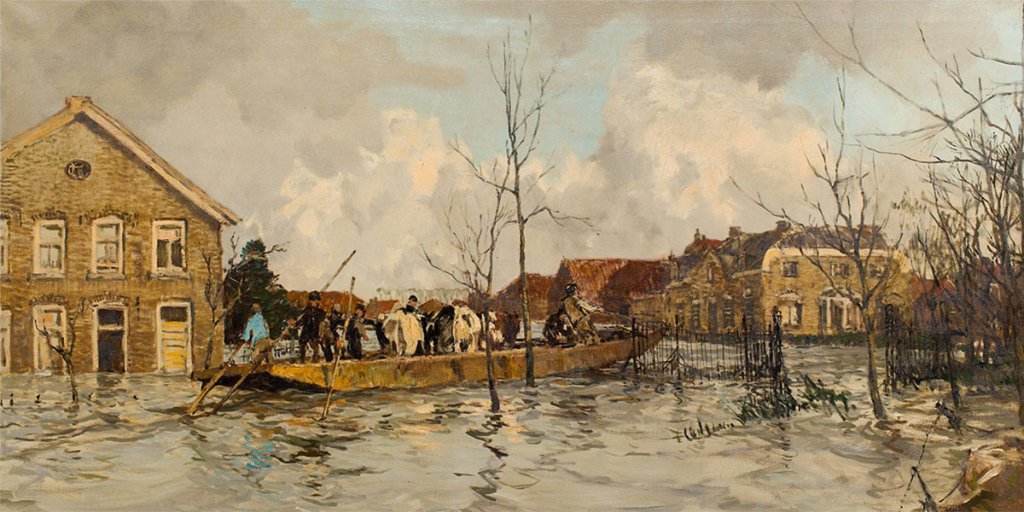
Tip: Bring your smartphone along for the media tour to hear some extra stories!
Bicycle routes and information signs
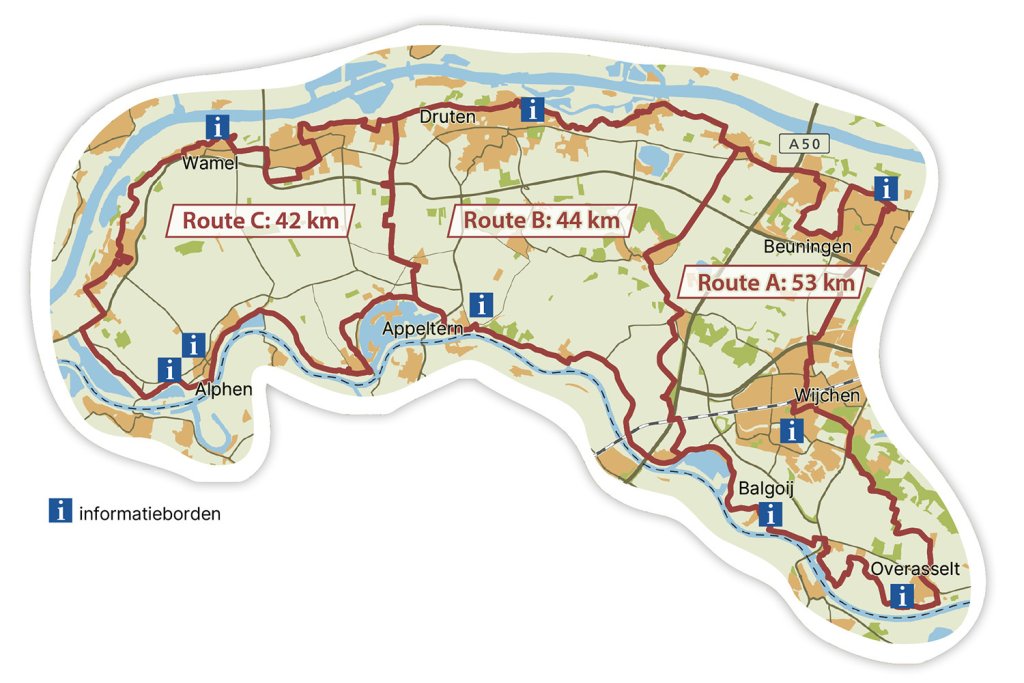
The Great Flood is the theme of three new cycling routes through Maas and Waal. Along the way, you’ll pass sites that tell the story of 1926, such as steam-powered pumping stations, emergency housing, and museums. You’ll also come across nine new information signs with stories about the significance of water at each location. And of course, you’ll cycle past charming outdoor cafes.
On April 18, 2026, new information signs were unveiled and cycling routes were opened at various locations in Maas en Waal. In Balgoij, the artwork“Wilhelmina in Balgoij” was also unveiled in a festive ceremony.
The Map the cycling routes is available at all tourist information centers. For more information about the cycling routes and where else they can be obtained, visit the Watersnood26 website at.
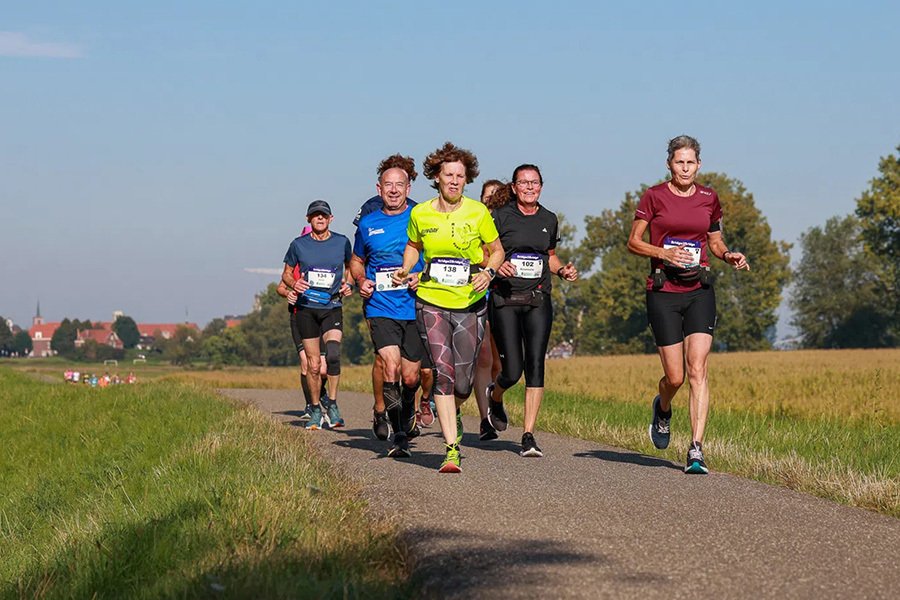
Flood Marathon on Sunday, May 3, 2026
On New Year’s Eve 1925, the Maasdijk broke. The Land van Maas en Waal was flooded: hundreds of homes and farms were lost. The water traveled 42.2 kilometers—from Overasselt to the lowest point in Dreumel.
This historic watercourse formed the route of the unique WatersnoodMarathon. It was a huge success! There were about 500 participants. Runners could complete the course individually or as a team in the relay. It was also great training for the 4Daagse for the walkers who took part.
The past, the present, and the future
"Maas en Waal Flows" is an invitation to come together to remember, discover, learn, and enjoy. Here, water is not just a river or a threat—it is a force that connects us, inspires us, and moves us forward. Join us and let the Maas and Waal flow!
The Past: Remembering
Experience the stories of 1926. Discover how the flood affected our lives through exhibits, photographs, and personal stories brought to life by residents, organizations, and museums. Together with the Watersnood26 working group of the Tweestromenland Historical Society, Maas en Waal is making 2026 a meaningful year of remembrance. The Watersnood26 working group has put together a varied program of activities throughout Maas en Waal, ranging from theater performances and exhibitions to a Watersnood Marathon.
Visit the Watersnood26 website at for more information about the activities and how to register. New activities are added to the program on a regular basis.
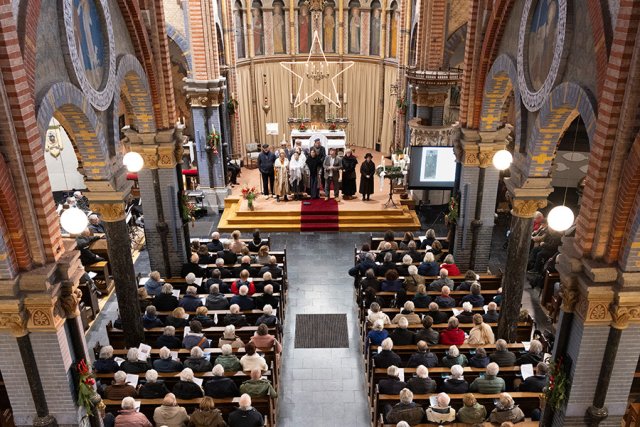
Memorial Service
The kickoff for all the programs of Watersnood26 and Maas en Waal stroomt took place on December 31, 2025, with a special commemorative gathering at St. Anthony the Abbot Church in Overasselt. In the presence of the King’s Commissioner, Daniël Wigboldus, the dike reeve of the Rivierenland Water Board, Tanja Cuppen, and the five mayors of the participating municipalities, the dike breach of 100 years ago was commemorated with music, theater, recitations, and speeches. Afterward, bells rang throughout the Maas and Waal region.
Today: experience
Discover and experience just how unique the area between the Meuse and the Waal is. Art installations, themed trails, and exhibitions highlight both the extraordinary and the everyday aspects of our region. This part of the program is still very much a work in progress. Here are a few activities we can already share:
Information signs
Starting April 18, 2026, new information signs will be installed in the five municipalities of Maas en Waal. These signs feature stories about the significance of water in each location. The signs are located along the three new cycling routes.
Location of the signs:
- Overasselt: On the Maasbandijk near the memorial/art installation at the rest area
- Balgoij: On Boomsestraat near Roncalli Elementary School
- Appeltern: At the De Tuut steam pumping station
- Alphen: Maasdijk across from house number 21
- Alphen: Murder Houses to the left of the bench
- Wamel: Dorpsstraat near the rest area
- Druten: Waalbandijk at the top of Stationsstraat
- Beuningen: Heemstraweg, across from the church
- Wijchen: Kasteellaan, next to the castle gate
The Maas and Waal Rivers in pictures
Three photographers are capturing the identity and contemporary life of the Land van Maas en Waal as it relates to water. They all share a special connection to the region. The photographs will be exhibited and published starting in the summer of 2026. More information will follow.
Below, the photographers talk about their connection to the Maas and the Waal rivers and how they approach their assignment.
Annie van Gemert (Nijmegen) “Portrait of Batenburg”
"As a photographer, I find Batenburg special. It’s a small town on the Meuse River with a rich history and a population of over 600. The old buildings and quiet streets give the village a unique atmosphere. In the past, people here lived much more closely together. Back then, the church was a gathering place. Now it’s mainly used for concerts, parties, and weddings. Farm life has also changed and become less widespread."
"In 2026, I’ll be exploring what still brings people together. Think of carnival, neighborhood parties, concerts, or small gatherings. I want to show how modern residents live in this historic setting and the river landscape. That’s why I’m taking family and group portraits—in people’s homes, on the street, and out in the countryside."
On display
- From September 6 through October 25
- On Saturdays and Sundays from 1:00 p.m. to 5:00 p.m.
- At De Nieuwe Gang in Beuningen
Marcel van de Bergh (Zaltbommel) “Living on and with the dyke
"I grew up on the dyke in Appeltern. To me, the dyke is more than just a strip of land that protects us from the water. It always feels like the wind is blowing hard there, and you’re always cycling into a headwind. The dyke is part of everyday life. In winter, children slide down it on their sleds; tourists stop there for the beautiful view; artists find inspiration there; and St. Nicholas docks there every year. Due to climate change, the dyke is being raised a little bit at a time, and the landscape behind it sometimes seems to be getting lower. The dyke is always there, often without us even noticing it. With my photo series, I want to show what the dikes along the Maas and the Waal mean to the people who live there."
On display
- From September 25 through November 29
- Wednesday through Sunday from 1:30 p.m. to 5:00 p.m.
- At the Tweestromenland Museum in Beneden-Leeuwen
Karin van de Wiel (Wijchen) “Shaped by the Meuse”
"In my project *Shaped by the Meuse*, I explore how the Meuse has shaped the landscape between Batenburg and Wijchen. This area contains ancient traces of the river: a floodplain forest, primeval river dunes, former river branches, and hidden waterways. Sometimes these are located kilometers away from the river. Many people no longer recognize these places, but they still determine how we use the land."
"I want to bring these hidden landscapes to light. Not to show exactly where everything was, but to convey how the Meuse River has shaped the area. It will be a photographic journey through Rivierenland."
On display
- Spring 2027
- At Hernen Castle
Historic Dike Warehouses in the Spotlight
There are eleven distinctive dike warehouses in the Land of Maas and Waal. These unique little buildings have been part of the landscape along the dikes for centuries. This fall, they will receive special attention during History Month.
Storage for dike monitoring
In the past, the dike warehouses were used to store materials needed for dike maintenance, such as tools, sandbags, and oil lamps. The warehouses are located in Alphen on the Maas, Appeltern, Beuningen, Deest, Dreumel, Ewijk, Maasbommel, Nederasselt, Weurt, Wijchen, and Winssen.
Notable Monuments
The dike warehouses look very similar. They have gabled roofs with roof tiles and are located on top of the dyke. A bulge in the dike embankment made it possible to build these small structures here. Due to their cultural and historical value, most of the warehouses have since been designated as historic landmarks.
More visible to everyone
Although the dike warehouses have been part of the landscape for a very long time, many people are unaware of their history. That is why, in October, the buildings will be given extra visibility for residents and visitors. All eleven locations will feature an eye-catching marker that references the landscape in which the warehouses are situated. The design was created by House of Thol from Overasselt.
Hidden History
Through this project, the “Maas en Waal Stroomt” program aims to highlight a unique piece of history from the Land van Maas en Waal. In this way, the dike warehouses and their stories will once again take their place in the region’s collective memory. The project is made possible thanks to the support of the five municipalities in the Land van Maas en Waal and the province of Gelderland.
The Future: Looking Ahead Together
How do we address climate change and water safety? Together, we learn from the past and work on smart, innovative solutions that prepare us for the future. We bring together ideas and expertise from residents, educational institutions, the scientific community, and organizations. The Maas and Waal rivers serve as the starting point for new water solutions. Below, you’ll find an overview of what we’re working on throughout our program.
Dynamic Map the Rivers
The course of rivers is constantly changing. Using a digital Map , we Map soon show how the Maas and Waal rivers have changed over time.
"Maas en Waal stroomt" is a program run by the five municipalities of Beuningen, Druten, Heumen, West Maas en Waal Wijchen. The municipalities are collaborating on this initiative with the Watersnood26 working group.
"Maas en Waal stroomt" is made possible in part by the Province of Gelderland.