Coalition Agreement for the Municipality of West Maas en Waal
1 Executive Summary
Chapter 3 translates the coalition’s shared vision into seven clear priorities for West Maas en Waal. At its core is a municipality that is close to its residents, invests in social cohesion, promotes balanced housing development, and provides opportunities for entrepreneurs and organizations. At the same time, the coalition is committed to livable and green villages, improved accessibility and safety, and sustainable, future-oriented development. As such, Chapter 3 forms the substantive core of the coalition agreement: it provides guidance for policy, implementation, and cooperation during the coming administrative term.
- A resident-friendly and welcoming municipality with accessible services, clear communication, and greater visibility in the villages.
- A vibrant society in which social cohesion, prevention, volunteer work, and support for youth and seniors are central.
- Housing development that is in balance with local needs, with a special focus on first-time homebuyers, seniors, and the quality of life in villages.
- A thriving local economy with opportunities for entrepreneurs, farmers, recreation, and stronger collaboration with regional partners.
- A pleasant living environment with green, healthy, and distinctive villages, supported by strong community organizations and up-to-date village visions.
- An accessible and safe municipality that prioritizes traffic safety, social safety, and a comprehensive AED network.
- A sustainable and forward-looking municipality that actively supports its residents in the energy transition, sustainable mobility, and circular economy initiatives.
2 Introduction
The coalition agreement for West Maas en Waal has been concluded between our two political parties, FD West Maas en Waal CDA West Maas en Waal. It builds on the existing collaboration that has been in place since 2022. The agreement is ambitious and thus fulfills the broad mandate we received from our voters on March 18, 2026. Although it is an agreement between two political parties, it does not exclude other political parties. On the contrary, there is more than enough basis to also fulfill the ambitions of our opposition. We therefore look forward to constructive cooperation with them.
Together
“Together!” is the name we’ve given to this agreement. We believe that the strength of our municipality lies not in rules or in bricks and mortar, but in the connections between people—connections with and among those who live, work, and spend time in the municipality, as well as the people who govern our municipality and keep it running on behalf of the community. West Maas en Waal at its best when we all join forces to live, work, and get along harmoniously.
The world is becoming increasingly individualistic, and we’re seeing that in our local community as well. Although West Maas en Waal still exhibits strong social cohesion West Maas en Waal to larger municipalities, it is also noticeable here that residents are doing things together less and less and increasingly on their own. As political parties, we see a risk for the future if the sense of community declines. After all, people will need each other more and more in the future as the welfare state continues to crumble. Studies also show that individualization reduces people’s sense of happiness, causing them to get sick more easily and even live shorter lives.
For us, “Together!” is not just a hollow slogan, but the foundation of a vibrant, resilient church that is ready for an uncertain future.
- Residents: We listen to you and also encourage you to take the initiative. The wisdom of the street and the strength of the neighborhood are indispensable.
- Business: Our entrepreneurs are the driving force behind the local economy. By working together, we create opportunities for innovation and job creation.
- Community life and organizations: they are the glue that holds our villages together. We support initiatives that enable us to be active, experience, and share moments together.
Thanks to “Samen!” West Maas en Waal is becoming West Maas en Waal enjoyable and stronger West Maas en Waal . We’ve chosen a path where we don’t impose challenges—from housing construction to the energy transition—from the top down, but shape them from the bottom up. Together, we’re building a community that’s not only a pleasant place to live, but where everyone feels a sense of ownership over our shared future.
A strong municipality starts with a government that has its own affairs in order. For us, “Together!” also means a renewed focus on the internal triangle that keeps our democracy running:
- Municipal council executive board: a relationship based on trust, transparency, and a shared vision for our village centers.
- Executive board civil servants: a close collaboration in which political ambition and professional expertise reinforce one another.
- Municipal council city officials: short lines of communication and clear information sharing, so that we can make decisions efficiently.
Within our municipality
Our municipality is financially stable. Its budget is in order and provides room for investment. The small administrative organization ensures that communication lines are short, that employees can easily find one another, and that they are willing to help each other. We are also in good shape from a technical standpoint. The IT infrastructure is modern and up to date. Because the organization is not a cumbersome oil tanker, the municipality enjoys a high degree of agility.
This strength is counterbalanced by a certain vulnerability. Due to its small size, the municipality is susceptible to staff absences. Hiring external staff means that crucial experiential knowledge is acquired from outside the organization and disappears when they leave. Furthermore, our municipality lacks sufficient control over its information management. Information is not systematically documented enough, leaving the municipality unaware of what it does and does not know. Factual knowledge is lost, and existing factual knowledge remains untapped.
Outside our municipality
The world around us is changing rapidly, creating both challenges and opportunities for our services. National and even international developments are affecting our municipality as well as our local community. Furthermore, the municipality’s influence on its administrative partners is currently too limited. As a result, our municipality’s effectiveness in the region is lagging behind.
Regulatory burdens are becoming an increasingly major source of frustration. “Nothing is allowed, and what is allowed is mandatory!” was Youp van ’t Hek’s pithy take on the bureaucratization of society. Managing risks is important—until it reaches the point where no one dares to do anything anymore. Our municipality must ensure that there is still room for spontaneity.
(West) Maas and Walers have a unique culture and mindset. Traditionally, our people have learned to take personal responsibility and look after themselves. Our residents are down-to-earth and self-reliant.
However, our municipality and community are facing major challenges. On a societal level, we are seeing increasing individualization and the negative side effects of social media. Feelings of insecurity and loneliness are on the rise across all age groups. Objective information is under pressure from “fake news” that is indistinguishable from the real thing, partly due to the rapid rise of AI. The aging population is leading to growing demand for care and a shrinking labor force. The national government, too, is facing major uncertainties. This trickles down to local governments, which see the effects in finances that are difficult to predict.
The Way Forward
Given the characteristics mentioned above and the wishes of our residents, we, as coalition partners, are setting a course toward a vibrant West Maas en Waal. To this end, we have identified seven priority areas. The effects of these priority areas extend beyond the scope of individual administrative programs. For this reason, the effects of these priority areas have been translated into concrete programs in this coalition agreement.
3 Our Seven Priorities
The seven priorities are the common thread running through both of our election campaigns. They also embody the spirit behind this coalition agreement: a framework through which we outline what we politically expect from our executive board the coming council term, and why. The coalition agreement is specific in its wording, but certainly leaves room for our executive board implement it in the best possible way within the municipal administration’s program. Of course, as long as the goal—the “why”—remains clear.
We want to:
- Be resident-friendly and welcoming.
- Continuing to build a vibrant society.
- Housing development that is balanced and meets local needs.
- A thriving local economy.
- A pleasant place to live, with thriving villages and a strong community life.
- Be accessible and safe.
- Being sustainable and forward-thinking.
3.1 Resident-friendly and welcoming
We want to make our municipality even more resident-friendly and welcoming. A municipality where residents and visitors always feel welcome, heard, and respected. A municipality that demonstrates its commitment to serving its residents, while also expecting those residents to take some responsibility for themselves. In short: a municipality that stands with its residents.
What we want:
- Our executive board municipal council don't just municipal council on Dijkstraat; they also make appearances in the villages.
- We monitor social media to identify any grievances or complaints about our municipality. Our municipality will reach out to the people who have expressed these grievances to discuss the matter. If the concerns are valid, we will work to find a solution and offer an apology.
- “Putting residents first” means that our municipality gives residents the benefit of the doubt. Our municipality will always communicate this clearly.
- Municipal services:
- The KCC at our town hall renamed the “Resident Service Center.” Residents can visit without an appointment, though those with appointments will be given priority.
- We will explore whether we opening hours extend the current opening hours and whether more services can be handled online through the municipal website. This also applies to VraagWijzer, both in person and online.
- We will work through all (digital) channels to help people formulate their questions. Many people are unable to ask their questions effectively. Our municipality will assist them in this regard.
- When communicating with residents, the language used will be at the B1 level. Most people understand this. In addition, the importance of the message’s content will be made clear in the communication, so that readers know why they are being told this.
- Communication via the BouwApp and the BuitenBeter will become more commonplace within our community. These apps appear to be very effective and user-friendly. We will therefore continue to promote their use by our municipality and in connection with spatial planning projects taking place within our municipality.
- Thanks to our central location, our rural setting, our excellent amenities, and our culture, West Maas en Waal has become West Maas en Waal attractive place to live and spend time. Life here is spacious, safe, clean, and beautiful, and so much is within easy reach. This has drawn many people here, including those with different backgrounds and perspectives. We want our community to welcome these people warmly and help them find their place in our society. This applies both to those who have settled here and to those who are visiting.
3.2 Continuing to Build a Vibrant Society
Our municipality faces major challenges in the coming years. These include climate change, the energy transition, biodiversity, (digital) security, and energy dependence. The well-being of our youth and seniors is also a key priority. To tackle these challenges, we need a solid foundation. This foundation lies in the strong social cohesion within our local community. Fortunately, we can build on an existing, strong foundation. Our residents are known for their down-to-earth, can-do attitude. There is also a strong sense of community in the villages; our people are positive and show great involvement in local community life. This is truly something to be proud of.
We strive to create a municipality that is in constant dialogue with the community about perceived physical safety, but that has sufficient flexibility to take swift and tailored action.
In a vibrant community, people look out for one another. Looking out for one another isn’t just about giving; it’s also about reciprocity. We focus on what someone *can* do: for example, someone who is less physically mobile can still lend a listening ear, provide administrative support, or keep an eye on things in the neighborhood. Everyone retains a role and a value within the community.
Municipalities in the Netherlands play a central role in the well-being of children and the families in which they grow up. Focusing on prevention helps keep problems from arising. Appropriate treatment ensures that suitable assistance is available if something does go wrong. The same applies to seniors, although the two groups are, of course, not comparable.
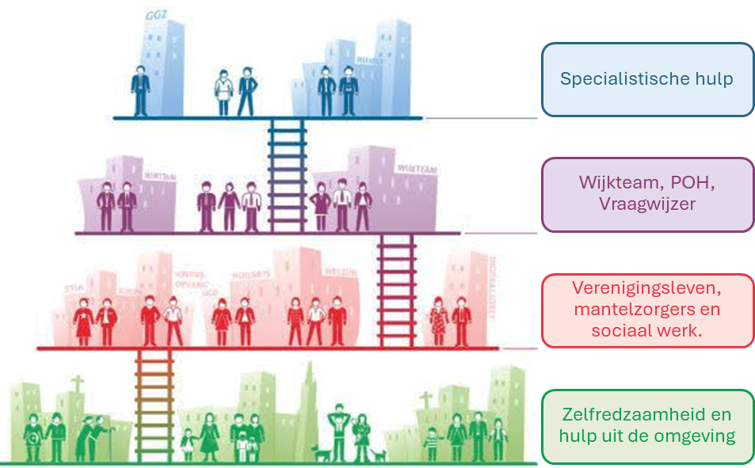
A solid social foundation—comprising residents, networks, and basic services—is essential for an inclusive and vibrant society. This foundation plays an important preventive role in reducing the likelihood that people will need to move on to (more expensive) care facilities. Although municipalities bear primary responsibility, citizen initiatives, housing authorities, and the business community also contribute to this effort. Additional support remains urgently needed for vulnerable groups for whom today’s complex society places too great a burden. The image below illustrates the social foundation.
3.3 Balanced Housing Development That Meets Local Needs
There is a severe housing shortage in the Netherlands. This means that there will be significant construction in the coming years to ensure everyone has a roof over their head. Our municipality also has a responsibility in this regard. Housing construction is much more than simply stacking bricks. It is a complex challenge to build the right homes in the right locations.
West Maas en Waal unique due to its relatively large number of owner-occupied homes, the average size of those homes, and the high proportion of single-family homes. The figures below show how the housing stock in our municipality compares to that of, for example, Druten or the Netherlands as a whole:
West Maas en Waal | Druten | Netherlands | ||||
|---|---|---|---|---|---|---|
| Number of homes | 8.896 | 8.752 | ||||
| To Property | Homes for Sale | 6.396 | 71,9% | 5.741 | 65,6% | 57,1% |
| Housing Cooperative Rentals | 1.761 | 19,8% | 1.952 | 22,3% | 28,3% | |
| Other Rent | 738 | 8,3% | 1.059 | 12,1% | 14,5% | |
| By Housing Type | Single-family | 7.597 | 85,4% | 7.080 | 80,9% | 61,8% |
| Multi-family | 1.299 | 14,6% | 1.672 | 19,1% | 38,2% | |
| Into old age | Before 1945 | 1.566 | 17,6% | 875 | 10% | 18,1% |
| 1945–1970 | 2.055 | 23,1% | 1.435 | 16,4% | 22,6% | |
| 1971–1990 | 2.215 | 24,9% | 3.501 | 40,0% | 28,7% | |
| 1991–2000 | 996 | 11,2% | 1.269 | 14,5% | 11,1% | |
| 2001–2010 | 578 | 6,5% | 1.024 | 11,7% | 8,9% | |
| Starting in 2011 | 1.005 | 11,3% | 840 | 9,6% | 7,2% | |
| Average year of manufacture | 1973 | 1980 | 1971 | |||
| Average area | 162 m² | 141 m² | 120 m² | |||
| Average WOZ value | 435,000 euros | 393,000 euros | 398,000 euros | |||
These figures are taken from waarstaatjegemeente.nl and refer to the year 2025. They provide some perspective on what we, as political parties, West Maas en Waal for West Maas en Waal .
Housing development within our municipality is largely driven by market supply. The municipality itself owns very little land and is therefore heavily dependent on market initiatives for new construction projects. In recent years, it has become clear that this dynamic market requires guidance to steer developments in the desired direction. A guiding hand, ensuring balance, must steer housing development toward:
- A more balanced distribution across the various villages, in line with each village’s capacity to accommodate new housing.
- The proportional growth of physical and social infrastructure. After all, the construction of more homes leads to a growing population and, consequently, to increased traffic, energy consumption, waste production, water usage, and a larger and more diverse student body. To manage this growth effectively, our municipality takes on some of the responsibility itself and, where necessary, encourages, incentivizes, or facilitates other service providers to maintain a balance.
What we want:
- Increasing the number of homes to maintain or expand community services. This applies to all eight of our villages. We want to build homes in line with the villages’ capacity and that meet the needs of our own community.
- For seniors, there is a particular need for lifetime-adaptable homes, step-free homes, clustered housing, and informal care (mutual care) homes. The emphasis here is on housing for our own residents.
- For first-time homebuyers and one- and two-person households, there is a need for compact homes with one or two bedrooms and a small lot, in both the for-sale and rental markets. In addition, there is a clear demand among young first-time homebuyers and singles in village centers for compact rental and for-sale apartments.
- We want to build with an eye toward the future, using climate change and the energy transition as our guiding principles. Where possible, we also want to further green the outdoor spaces around the homes, creating areas for socializing, pedestrians, and possibly cyclists as well. This fosters a sense of tranquility and is good for health and well-being; it ensures natural water management and contributes to biodiversity and air quality.
- When it comes to housing construction and home modifications, greater coordination is needed between the Spatial Planning and Community Affairs departments. Providing quality home care sometimes requires (urgent) home modifications, some of which may require a permit. Existing and future care needs must be taken into account when processing environmental permits for new construction or renovations. This means that, where appropriate, we will prioritize urgent cases and interpret building codes flexibly. If necessary, we will develop specific policy guidelines for this purpose.
- More housing means an expansion of the community and, consequently, an expansion of the associated amenities. These include infrastructure such as water and electricity, roads, sewer systems, and public green spaces. In addition, social services must grow proportionally. The number of healthcare facilities—such as general practitioners, dentists, pharmacies, and therapists—must remain in balance with the population and, ideally, be available nearby.
- We want to explore the coherence or connection between nearby (separate) projects and developments. For example, in Beneden-Leeuwen , this includes Beneden-Leeuwen Hey-Acker and De Peel developments, as well as the old police station (Ons Huukske). The main focus here is on creating a natural connection between these projects. This will bring together housing with recreational and sports activities in a neighborhood connected by green spaces.
The village passports, which were published about 10 years ago as part of the Village Quality Plan, need to be updated. The new village passports should also highlight the cultural and social characteristics of neighborhoods and villages.
3.4 A Thriving Local Economy
The local business community is of great importance to our society. The agricultural sector and tourism have long been key pillars of our local economy, but retail, wholesale, services, and artisan businesses also provide income, a sense of purpose, and a connection to the local community. A key development is the emergence and growth of the number of self-employed individuals—people who are passionate about pursuing their trade or profession in their own way. We are also seeing a trend toward economies of scale. Traditional family businesses are being absorbed by larger companies. With these developments, we are witnessing both expansion and contraction at the same time.
The ratio of jobs to housing units in West Maas en Waal 46.3%, which amounts to more than 4,100 jobs. Nationwide, this ratio stands at 54.5%. To approach the national average, employment in West Maas en Waal would need to increase West Maas en Waal approximately 750 jobs. Strengthening small and medium-sized enterprises and the self-employed sector offers the most promising strategy for further increasing local employment.
Many self-employed individuals and small and medium-sized business owners are dissatisfied with our municipality’s policies regarding:
- permitting and enforcement,
- high local taxes and fees,
- differences with neighboring municipalities (particularly Druten) and
- insufficiently demonstrated commitment.
Our municipality’s vision is “Together!” This stands for cooperation among business owners, between business owners and the municipality, and between the municipality and other government bodies and agencies.
There are opportunities for closer cooperation with Druten in various sectors and with the Rivierenland Region, particularly in the areas of tourism and recreation. The municipality will need to play a proactive role in this regard.
What we want:
- We optimize the local business climate by keeping regulations that go beyond legal requirements to a minimum, supporting business owners with permit applications, and working together to find solutions. Through effective account management, the municipality can maintain ongoing contact with individual business owners. This includes, in particular, personal meetings and site visits.
- Together with various business organizations and business clubs, we organize networking events where obtaining useful information and getting to know one another in a relaxed setting go hand in hand. Such gatherings can also be used to share relevant information about municipal ideas and plans with business owners. We could also explore opportunities for collaboration with Druten in this regard.
- Work more closely with the Economic Board FruitDelta Rivierenland to foster closer collaboration between government, education, and businesses. This will facilitate the exchange of knowledge and expertise and stimulate innovation. There are particular opportunities here for the agriculture (fruit growing) and tourism sectors. For the other sectors, opportunities for collaboration can be explored with other municipalities in the Maas and Waal region, particularly Druten.
- The tourism sector is well represented in our municipality, but there is still a need for new facilities for inclement weather. We can also work on raising awareness of existing options for recreation during inclement weather.
- In the agricultural sector, in addition to the expansion of farms, we are also seeing smaller farms develop all kinds of ancillary activities. Examples include recreation, healthcare, and farm stores. However, this development must remain limited so as not to hinder the professional development of the surrounding agricultural sector.
- We see opportunities for a future-proof agricultural sector, in which entrepreneurs have prospects for investing, innovating, and producing sustainably. In doing so, we seek to strike a good balance between agriculture, the living environment, and other spatial planning challenges. We view nature-inclusive agriculture as a promising development. Entrepreneurs who contribute to biodiversity, soil quality, and landscape management are partners who actively contribute to the municipality’s goals.
- We are committed to expanding industrial parks and encouraging businesses that belong there to relocate from the built-up areas to those industrial parks. At the same time, we are encouraging small businesses, retailers, and restaurants to remain in the village centers or even expand there.
3.5 A Great Place to Live
The Land of Maas and Waal, as well as our municipality, are known as a rural, water-rich, and pleasant river region. The area exudes tranquility and open space and has a strong connection to nature. Our landscape consists of vast floodplains, orchards, and dikes. It invites you to enjoy the outdoors, go for walks, ride bikes, and engage in recreational activities on or along the water. Although it feels rural and peaceful, it is strategically located, with major cities in every direction within easy reach.
Each of our eight villages has its own distinctive qualities that make it a great place to live. These village identities change over time, and that is a positive development. Nevertheless, we want to guard against changes that occur too quickly or on too large a scale. Changes must take place at a natural pace. Our municipality welcomes residents from outside our villages with open arms. At the same time, we expect them to seek to connect with the culture and community life of the village in question.
Village identities are difficult to pin down and can also be subjective. The village profiles, which were developed about ten years ago, should be expanded—in close consultation with residents—to include the communities’ societal and social characteristics. This will make the identities more complete and explicit for everyone. In this context, it would also be appropriate to update the “Vision for Quality of Life in Village Centers 2030” from November 2013 to 2040 or 2050.
A pleasant place to live cannot exist without (plenty of) greenery. Greenery helps create an attractive and peaceful living environment and plays an important role in climate adaptation and biodiversity. It provides cooling on hot days, helps retain water locally, and offers habitats for insects and birds in particular. In addition, greenery encourages the use of public spaces for walking and biking.
Healthy communities also require activities and strong organizations. Organizing, helping, and participating foster a sense of connection. It provides a sense of purpose and engagement, and turns living in the neighborhood into a shared community experience.
What we want:
- Further integration of greening into outdoor spaces wherever possible. This ranges from permeable parking spaces to the creation of flower beds and parks and the planting of trees.
- Public spaces encourage people to go outside and take a walk, and they offer plenty of places where people can meet and children can play. Therefore, these spaces must also be safe and clean. Sufficient resting areas, trash cans, and lighting should ensure this.
- There must be sufficient play facilities for children. Where space is limited, it can be explored whether water retention basins and wadis can provide space for this purpose.
- It is also important for seniors to socialize and stay active. The possibilities for senior gathering places and exercise gardens should be explored.
- We want to encourage and support neighborhoods in taking responsibility for managing their own public spaces. However, this is not a free pass to completely take over the outdoor space as they see fit.
3.6 Accessible and Safe
Safety and accessibility are prerequisites for quality of life. People must be able to feel safe in our municipality. The statistics show that, fortunately, this is already the case for many residents and visitors. However, the figures also indicate that West Maas en Waal scores West Maas en Waal when it comes to theft in general, and specifically theft of motor vehicles and residential burglaries. Compared to Druten, West Maas en Waal scores West Maas en Waal on various indicators. (Source: Dashboard – Public Order and Safety – West Maas en Waal)
Living in West Maas en Waal wonderful, but public transportation options in our municipality are very limited. Anyone who relies on public transportation must be very good at planning. Although bus service is still available in the Waaldorpen, it is completely lacking on the Maaskant. That is why many people have to rely on a car or an (electric or moped) bicycle. Public transportation by water consists of the ferries. Four ferries operate across the Maas, and one across the Waal, which is exclusively for pedestrians and cyclists. These ferries are crucial, especially for young cyclists and commuters. They also save motorists many kilometers of detours. Finally, they play a major role in tourism, where they serve as a significant recreational attraction.
West Maas en Waal a vast but sparsely populated area. This means that response times for emergency services—and ambulances in particular—can be relatively long. When every minute counts, it is important that the community be able to help itself, especially when it comes to first aid. In any case, it is important to ensure sufficient coverage in terms of the number of AEDs and the people who can operate them—the so-called citizen first responders. They are automatically and quickly summoned via 112 calls.
In the context of safety, there is an increasing focus on resilience. People are expected to be prepared for extreme situations such as prolonged power outages or extreme weather conditions. That is why we want to encourage our residents’ mutual self-reliance by actively supporting citizen initiatives and volunteer work. Together with community partners and safety regions, we are establishing neighborhood networks so that residents can take care of one another in times of crisis.
In terms of traffic safety, there is room for improvement on certain roads. Large differences in speed make slower traffic particularly vulnerable. Car drivers, motorcyclists, moped riders, and fat bike riders often exceed the speed limit. They are largely responsible for the sense of insecurity felt by other road users.
What we want:
- Cyclists feel less safe when there are no clearly marked bike paths or bike lanes. We want our municipality to work toward making the roads safer for all road users—especially cyclists and pedestrians—by tackling one issue at a time.
- Bus service is the responsibility of the province of Gelderland. We are committed to maintaining at least the existing bus routes. In consultation with the municipalities of Maasdriel, Druten, and Beuningen, lobbying the province could lead to an expansion or improvement of these routes. Consider, for example, a bus route serving both the villages along the Maas and those along the Waal.
- To maintain the ferries across the Meuse and the ferry at Wamel , we Wamel closely with the province and the riverside municipalities.
- We want to promote and strengthen the spirit of looking out for and caring about one another. Strong social cohesion in the neighborhood leads to greater safety. To that end, we are establishing a reporting mechanism (such as an ombudsman or confidential advisor) at the municipality where people can bring various safety issues—such as domestic violence, traffic hazards, or crime—to the attention of the authorities, anonymously if they wish.
- We will design the roads in town centers to better reflect an actual speed limit of 30 km/h. In addition, we will emphasize the importance of educating road users who drive too fast. Digital speed displays may also be used to alert road users to their current speed. Furthermore, where possible, the police will conduct more frequent speed checks in the villages.
- The AED network must be and remain in good working order. This requires not only a sufficient number of devices and their proper distribution, but also, and certainly just as important, the availability of a sufficient number of lay responders.
- Building a resilient society by encouraging our residents to work together and establishing neighborhood networks.
3.7 Sustainable and Forward-Looking
Although media attention to the energy transition and climate adaptation has receded somewhat, these issues remain relevant and urgent. The Municipal Instruments for Heat Transition Act has been in effect since early 2025. This law grants municipalities the authority to designate specific neighborhoods that must transition away from natural gas. The national goal is for homes to be natural gas-free by 2050. For many families, this transition is drastic and costly. Moreover, the subject matter is complex, causing many residents to wait before taking action.
Mobility is and remains of great importance. Compared to the national average and urban areas, car dependency is West Maas en Waal in West Maas en Waal . Because our municipality is spread out and has a distinctly rural character, residents are much more likely to rely on their own cars for work, shopping, and social interactions. Consequently, a large proportion of families in our municipality own two or more cars. These vehicles are sometimes left unused for relatively long periods and take up space, often in public areas. These are spaces that could instead be converted into green spaces. As mentioned earlier, public transportation in our municipality is very limited. It is minimal in our Waaldorpen and completely absent on the Maaskant side.
The electrification of the automotive sector is progressing well, but it remains expensive for many. In addition, grid congestion on our power grid is causing delays. The number of public charging stations is also insufficient. Based on averages for the Netherlands, about 13% of passenger cars in the country are now fully or partially electric. (Source: Nederland Elektrisch – EV Figures and Statistics in the Netherlands)
What we want:
- We want to keep our residents better informed about the upcoming energy transition. The focus here is on taking joint action, such as insulating homes, purchasing energy-efficient equipment, and applying for subsidies (ISDE). In addition, we want to explore whether it is possible to establish a local energy corporation (municipal energy company) to increase energy independence.
- Car traffic remains an essential part of our mobility. We want to actively promote shared mobility options such as car-sharing, bike-sharing, and initiatives like AutoMaatje and AutoMobiel.
- Better bike routes and more charging stations for e-bikes, especially in areas frequented by tourists.
- We are raising awareness of (volunteer-led) initiatives for clothing recycling and repair. Because textile production is very resource-intensive, repairing and recycling clothing yields enormous environmental benefits. It significantly reduces water use, pesticide use, and energy consumption, and also saves money.
4 Administrative Programs
The administrative programs translate the political ambitions outlined in the coalition agreement into concrete goals and budgets. The programs also provide further guidance on the social impact we aim to achieve in our municipality.
In this chapter, we—as coalition parties—outline our specific proposals for each administrative program. These proposals stem directly from the comprehensive assessment conducted by the CDA the FD. Whereas in Chapter 3 we primarily outlined the spirit of the coalition agreement, in Chapter 4 we specify the points we would like to see implemented.
4.1 Program 1: Living, Working, and Recreation
The "Living, Working, and Recreation" program focuses on municipal involvement in housing construction, business activity, recreation and tourism, permitting, and oversight and enforcement.
Housing Construction
- We want to achieve a better balance between new housing development and physical infrastructure, social services, and transportation facilities. Growth varies from village to village and therefore requires a tailored approach in each case.
- When developing new residential neighborhoods and redesigning existing ones, special attention is given to opportunities for creating walking paths, seating areas, and playgrounds.
- Our municipality should formulate a Quality of Life Vision to outline how population growth and housing development should be balanced. Currently, all villages have a need for affordable housing for first-time homebuyers and suitable housing for seniors looking to downsize.
- We are launching a pilot program to develop Village Livability Plans in collaboration with local associations. Because the needs vary from village to village, this is always a customized approach. We are exploring whether we can integrate these plans with the aforementioned Village Passports. Following a successful pilot, we will roll out this approach to the other villages.
- The expansion of the villages will take place in phases, while preserving the scale and identity of the village centers. The plan is based on balanced growth, with a substantial number of homes added to each village by 2040.
- In Wamel , we Wamel to relocate the supermarket to the Feestexpert site. We intend to do this in conjunction with the construction of housing units.
- We want our municipality to take a more proactive approach to engaging with project developers, thereby maintaining greater control over housing development sites and projects. We will explore whether a more proactive land policy could offer opportunities by examining small-scale, smart partnerships with project developers for specific sites or areas. In this way, the municipality can ensure that developments align with local needs and the municipal spatial vision.
- The temporary moratorium on new housing construction applications must be lifted as soon as possible. If the concern is that there are still insufficient policies in place regarding healthcare, infrastructure, schools, sewer systems, and roads, then these issues must be addressed with the utmost urgency. The executive board the municipal council executive board and involve municipal council .
- We want to establish a Livability Fund to finance physical, social, and traffic-related infrastructure for neighborhoods. All new construction and renovation projects requiring permits will contribute to this fund.
- In new construction projects, local residents are given priority when applying for a home.
Economic Affairs
- Create a business service center through which the municipality West Maas en Waal entrepreneurship in West Maas en Waal and supports initiatives that bring people together, such as the Technology Days.
- We are working with entrepreneurs to explore whether the emergence of new platforms can help strengthen ties among them. Although there are often already great collaborations between different groups of entrepreneurs, we want to further strengthen these ties. We do this, for example, by organizing networking events and by proactively discussing municipal initiatives with entrepreneurs.
- We are committed to strengthening our relationships with neighboring regions and the province. To facilitate the exchange of knowledge and expertise, our municipality could, for example, join the Economic Board of the Rivierenland Region. This would be particularly beneficial for the agricultural sector, fruit growing, and tourism. For other sectors, we are actively seeking cooperation with municipalities in Maas en Waal and the Rijk van Nijmegen.
- We are redeveloping industrial parks—such as the one in Wamel —with the goal of rezoning the vacated lots for residential development.
- Our municipality imposes no requirements beyond those mandated by law on businesses and organizations that are establishing themselves or seeking to expand within our municipality.
- Within two years, our municipality will draw up a comprehensive plan to reduce the number of vacant properties in the village centers.
- The Department of Economic Affairs actively visits the villages at least once a year to engage with local business owners. Only by increasing our visibility and accessibility can we build trust. In this regard, the municipality is committed to providing maximum support to business owners.
- We are committed to a future-proof agricultural sector in which entrepreneurs have opportunities to invest, innovate, and produce sustainably. In doing so, we seek to strike a good balance between agriculture, the living environment, and other land-use challenges. We view nature-inclusive farming as an opportunity. Entrepreneurs who contribute to biodiversity, soil quality, and landscape management are partners who actively contribute to our goals.
- Tourism and recreation remain key economic pillars for our municipality. The municipality is making deliberate choices to maintain and expand an attractive and diverse range of offerings for a wide variety of target groups.
- Together with the industry, we’re looking for new indoor activities and facilities, such as a climbing gym, an arcade, or a movie theater. In addition, we’re making a strong effort to promote existing venues such as Monkey Town in Wamel the escape rooms in Appeltern.
- The rates for tourist and water tourist taxes remain attractive within our municipality. The municipality is examining the extent to which differentiated rates could be introduced for different groups, such as guests at hotels and B&Bs, seasonal tourists at campgrounds, and day-trippers.
- For entertainment and education, there are interesting opportunities—both existing and potential—for our tourists and day-trippers. These include the Tweestromenland Museum, the Tuut, as well as the geological/archaeological workshop “Over de Maas” and nature walks organized by IVN.
Other Matters
- Residents must be able to visit the municipal service desk (Resident ServiceVraagWijzer) with or without an appointment. The option to make an appointment in advance remains available, and those with appointments will be given priority.
- The municipality, through the Resident ServiceVraagWijzer, will help residents articulate their requests for assistance and direct them to the appropriate person or agency.
- The Omgevingswet for the possibility of partially delegating amendments to zoning plans or environmental plans to the executive board the mayor and aldermen. This is also the case in West Maas en Waal. Although certain cases must executive board to the council for a binding opinion, the executive board may executive board certain cases independently. The council is kept informed, at a minimum, of all instances in which the BOPA instrument is used.
4.2 Program 2: Social Affairs
Social issues are about living together. They’re about how we interact with one another, how we work together to get things done, and how we help and support one another—both physically and mentally. Together, we’re like a successful sports team, a well-oiled machine where the whole is greater than the sum of its parts.
Resident Participation
- When it comes to planning and decision-making, we want our municipality to involve residents from the very beginning. Community-led initiatives are given a fair chance—not just the largest or most professional organizations.
- Through the "Right to Challenge," we want to give villages more say. Tasks that residents are better able to organize themselves should actually be entrusted to them. The municipality facilitates; it’s not the other way around.
- Feasible initiatives originating in the villages should receive the municipality’s full support. The municipality is not intended to take over these initiatives, but rather to help them get off to a good start and assist them when they request help. To this end, it is essential that knowledge be shared with associations and organizations.
- The Digi-Taalhuis is an important tool for helping people participate (more effectively) in our modern society. It helps people reach a higher level of language proficiency and also improves their digital literacy. This has significant social value, which is enshrined in our policy.
A resident-friendly and welcoming municipality
- We want our municipality to help residents, business owners, and officials formulate their questions and to make it clear who should be asked which question.
- West Maas en Waal and will remain a restroom-friendly municipality. We want to maintain this status by keeping the information in the HogeNood app up to date, encouraging stores and public buildings to participate in the app, and raising awareness of the app.
- In 2027, based on a pedestrian flow analysis, approximately 10 additional benches were installed at strategic locations to improve mobility for seniors.
- We are devoting more attention to discrimination in our municipality and are appointing an ambassador to address this issue.
- We are implementing the Diversification Act. Its implementation creates valuable opportunities for residents, our community members, and organizations to meet and connect, each of which contributes in its own way to mutual understanding, engagement, and broad public support.
- We are a welcoming community for Ukrainians who had to leave their homeland.
- We will maintain our current status as a dementia-friendly municipality and aim to expand it wherever possible.
Children and Youth
- We want to establish a Youth Quality-of-Life Fund for our young people. This fund can provide co-financing (up to 80%) for accessible (free) activities or facilities that improve the quality of life for young people in the villages. Examples include Johan Cruijff courts, pump tracks, and obstacle courses. executive board our executive board to draft a council proposal detailing how such a fund can be established and how disbursements from it can be made in a fair manner.
- We want to commission a study into the possibility of Boven-Leeuwen the sports facilities in Boven-Leeuwen into a single shared space, so that clubs can support one another and collaborate more effectively. This will expand opportunities for residents and strengthen the clubs’ position.
Clubs, organizations, and venues
- Our municipality should provide expertise to help organize activities, such as applying for permits. This will significantly ease the burden on organizations, especially when it comes to permits for larger events that are reviewed by the VRGZ.
- We want to provide associations and volunteers with more clarity on how they are covered for damages through the municipality’s volunteer insurance.
- MFA centers and village halls must once again become places for and by the community. We see them as accessible gathering places where everyone feels welcome and where refreshments are reasonably priced. Initiatives to eat together—for example, in village halls or through clubs and organizations—must continue to be supported.
- Our municipality must begin compensating volunteer organizations (nonprofit and without any employed or contracted staff) for their property taxes. However, the organization must always apply for the compensation itself.
- Our municipality’s grant regulation is due for a review. We want to explore providing additional funding for initiatives that support members and volunteers, as well as for activities that foster connections within the community. Regular activities are funded in accordance with the regulation and are not eligible for additional funding.
- We want to expand the scope of the Cultural Policy Statement by, for example, including Sinterklaas, Carnival, and other cultural activities in it.
- We want to streamline and simplify the procedures involved in organizing both small-scale and large-scale events.
- We are committed to compiling and publicizing events organized by village initiatives and associations by systematically including them in the village calendars. The municipality, in consultation with the village platforms, actively contributes to effective coordination among these calendars and encourages collaboration, so that initiatives reinforce one another and are showcased to their fullest potential.
- Vibrant villages call for action. We make a conscious effort to actively support clubs, volunteers, and village initiatives, because they form the backbone of our community.
- De Zeven Morgen Swimming Pool plays a vital role in recreation, health, and social connection in our municipality. To ensure the pool’s long-term future, our municipality is actively working to improve its sustainability and future-proof it. Modern facilities and energy efficiency are top priorities in this effort.
- We are aiming to have a new school building in Wamel four years, where the various schools will be housed together. A study Wamel to explore the possibility of locating the schools in the Roman Catholic church in Wamel . If this proves unfeasible, we would prefer to focus on a suitable residential facility for the village—specifically one without a care component.
Health and Well-being
- We are committed to reducing wait times at VraagWijzer, in part by using more efficient systems. In addition, we are reviewing the intake process and optimizing staffing levels. This should lead to better and faster communication with our residents.
- Neighborhood Mediation services must be available immediately and quickly when needed.
- To ensure that we are not unable to provide necessary care in the future, we want our municipality to focus on:
- prevention: preventing physical or mental health needs from arising;
- early detection: addressing care needs as quickly as possible to prevent them from worsening;
- a strong social foundation: building an environment in which residents help one another and take over basic support tasks from professionals;
- network collaboration: improving coordination among professional healthcare organizations to increase efficiency (for example, through neighborhood- and street-based home care services).
- During opening hours , all departments of our municipality (including VraagWijzer) opening hours be available.
- We ensure that our residents are properly guided toward the right care and support, and we want to set clear, measurable goals for this.
- We want to relax building codes for home modifications under the WMO so that people can get started quickly and continue to benefit from their adapted homes for many years to come.
- Informal care and multigenerational housing (shared living arrangements) are becoming increasingly important as inpatient care is being phased out. This means that more intensive care at home must increasingly be provided by informal caregivers. That is why we follow current policy guidelines, but critically monitor their effectiveness. We adjust these guidelines as needed.
- We are committed to strengthening social networks and combating loneliness. We do not leave residents to fend for themselves, but actively involve them in village life.
- We want Map the municipality’s need for small-scale residential and care facilities in Map . The permitting process for these facilities should align as closely as possible with that need.
4.3 Program 3: Physical Environment
Life in our municipality takes place within an area of 86 km² bounded by the Waal and Maas rivers. We are proud of the beautiful, expansive green space that is right at our doorstep. Despite its size, however, this space is scarce. We need space for a wide variety of purposes and must act accordingly.
Liveable and Climate-Resilient Villages
- Our municipality is located in a unique and vulnerable area between the rivers. That is why we have adopted a forward-looking approach in which water and soil are the guiding factors in our land-use decisions. We are implementing measures such as water storage and greening, and we encourage residents to contribute to these efforts.
- Our vision: “By collaborating with other municipalities in the Land van Maas en Waal, we strengthen our approach and capitalize on the opportunities offered by the region as a whole. In doing so, we position ourselves as a unique region in the Netherlands that is collectively preparing for the future in the areas of water safety, flooding, and drought.” We want our municipality to make this its vision as well, in word and deed.
- We keep our residents informed about public projects in our municipality, for example through the BouwApp. We will provide up-to-date information on the progress of the various projects throughout their preparation and implementation.
- Our municipality supports sustainable energy generation and innovative solutions for energy storage. We encourage proven solutions and actively involve residents in this process.
- Residents and neighborhoods will play a greater role in the management of public green spaces. Where possible and appropriate, residents and local initiatives will be involved in the maintenance, design, and quality improvement of green spaces.
- We are committed to promoting the installation of solar panels on rooftops rather than further expanding solar farms in rural areas. In addition, we are investing in the expansion of public charging stations, home insulation, and the deployment of energy coaches.
- As part of our ongoing efforts to promote sustainability, we are exploring how West Maas en Waal can become West Maas en Waal dependent on large energy suppliers. We are encouraging local ownership of sustainable energy projects and examining the possibilities for a local energy cooperative (such as Betuwewind), so that revenues and benefits remain in the local community as much as possible.
- For the redevelopment of the residential area in the center of Beneden-Leeuwen , the “Right to Challenge” process Beneden-Leeuwen utilized, whereby residents, business owners, and community organizations are invited to submit alternative proposals or implementation plans.
- In urban development projects, we want to actively work to combat urban sprawl and, wherever possible, strengthen green infrastructure. Green spaces are crucial for quality of life and biodiversity. When designing public spaces, we are therefore increasingly opting for greening. We are exploring where a second sidewalk could be replaced with more green space in public areas.
- The municipality is already doing a great deal in the area of climate adaptation. This work is being carried out in accordance with the “work-with-work” philosophy. We are asking our executive board focus more on explaining these efforts to residents and raising awareness, for example through a visible logo.
- We make quality of life a reality in practice: through safe and clean streets, ample public green spaces, and accessible gathering places in every neighborhood. In terms of spatial development and the management of public spaces, we want our municipality to actively work toward creating a pleasant, safe, and social living environment. Residents and stakeholders are involved in these developments.
- Our municipality encourages community organizations, sports clubs, businesses, and residents to explore opportunities for local energy hubs, in which the energy supply for nearby buildings or facilities is organized and shared more efficiently. The municipality facilitates and provides support where necessary, but the initiative lies primarily with the organizations and partnerships involved.
- Our municipality must actively work to simplify and expedite procedures related to the organization of both small-scale and large-scale events. Events contribute to vibrancy, social cohesion, and economic activity. That is why the municipality is streamlining permit processes and offering clear, accessible support to organizers. The focus is on transparent rules and tailored solutions where necessary, so that event organizers are encouraged and supported.
- Our municipality is actively working to create a shared space for the Scouting program and an event venue for community organizations in Dreumel. This will provide a future-proof facility that offers space for community activities, social gatherings, and events. At the same time, we are developing plans for apartment construction on the current site of the Scouting program, in line with housing goals and spatial planning guidelines.
- Playing sports, especially as part of a team, is important for the physical and mental well-being of our residents. It’s also fun. Our municipality actively collaborates with sports clubs to improve their appeal and accessibility. In this context, for example, Unitas and Wamel Tennis Club want Wamel to their shared parking lot and explore the possibilities of creating a natural ice rink there during freezing weather.
- The municipality is committed to improving official dog-walking areas in all neighborhoods. As part of this effort, existing locations will be assessed for safety, ease of use, and layout, after which appropriate facilities—such as fences and lockable access gates—will be installed where necessary.
Mobility and Traffic Safety
- Efforts are focused on improving and future-proofing access to the villages along the Meuse River. This involves developing a smart combination of transportation modes, including public transportation, shared mobility, bicycle routes, and easily accessible amenities. Particular emphasis is placed on the needs of residents, business owners, and visitors, with a focus on sustainability, accessibility, and regional connections.
- Our municipality will need to work closely with the province of Gelderland to find a solution for the unsafe intersection of Van Heemstraweg and Nieuwe Weg in Wamel. If this effort is successful, it will enable us to address other similar situations.
- Our municipality must persuade the province to modify the roundabout between the N322, Van Heemstraweg, and the N323 in order to alleviate the daily traffic congestion there.
- Within the municipality, attention is being paid to the quality and recognizability of all village entrances. These serve as the villages’ calling cards and contribute to their appeal, traffic safety, and hospitality. Where possible, village entrances are being upgraded with appropriate landscaping, greenery, lighting, and clear transitions between rural areas and built-up areas. To this end, our executive board must develop executive board plan that can be implemented in conjunction with other management and maintenance plans for our public spaces.
- Within the municipality, public lighting is being optimized where necessary to improve traffic safety and public safety. Particular attention is being paid to pedestrian routes, sidewalks, and crosswalks to ensure an adequate and uniform level of illumination. The work is being carried out in phases and, where possible, coordinated with regular maintenance and replacement projects.
- Our municipality must persuade the province to reroute agricultural traffic traveling over the PWA Bridge away from the residential areas in Beneden-Leeuwen Wamel.
- Our municipality is working on a long-term solution to improve access from the Leeuwse Veld to the Maas and Waalweg. The Van Heemstraweg between Zijveld and Veesteeg would also need to be redesigned to connect the Leeuwse Veld with the main village. Our executive board develop a plan for this, which Wamel presented in conjunction with the ongoing study on access roads for Beneden-Leeuwen Wamel .
- A village-focused road safety agenda is being implemented, which identifies the most significant problem areas along school routes, bike paths, and crosswalks. Based on this, an annual action plan is drawn up that outlines specific measures. Implementation takes place in phases, with a focus on road safety, quality of life, and feasibility. Special attention should be given to crosswalks near community centers, multi-purpose facilities (MFAs), and schools.
- Public transportation must be maintained, including both buses and ferries. Our municipality, together with our municipal council , must develop municipal council long-term vision for public transportation, neighborhood buses, shared mobility, and volunteer taxi initiatives. Ideally, it will collaborate with the Rivierenland Region on this. Ferry services remain an essential link and will be actively supported.
- We want our municipality to focus on improving traffic safety and the appeal of bicycle routes between the villages and in rural areas. In doing so, we want to prioritize routes where road safety is a concern, such as the Nieuwe Weg (Alphen), the Zijveld (Maasbommel), and the Nieuwstraat (Alphen). Where appropriate, we want clear, visible, and effective safety measures, such as red bike lanes and other bicycle safety features.
- Our municipality continues to urge the other road authorities (the province, the water board, and Rijkswaterstaat) to ensure the smooth flow of traffic through the St. Andries Lock, along the Maas en Waalweg, and across the Prins Willem-Alexanderbrug PWA Bridge). In particular, attention should be focused on measures to limit cut-through traffic. One possible measure could be to install a weigh station for freight traffic at the Prins Willem-Alexanderbrug. Regarding the issues surrounding the St. Andries Lock, we strongly emphasize the importance of cooperation with the municipality of Maasdriel. In addition, adequate lighting on the Prins Willem-Alexanderbrug is a key priority Prins Willem-Alexanderbrug .
- Our municipality is entering its entire road network into Map. This includes both the current condition of the road surface and traffic safety on various road sections. This assessment will be conducted on an ongoing basis. Based on this assessment, and in close consultation with our municipal council, an action plan will be drawn up to address traffic safety and maintenance. In this way, we aim to ensure that we can address problem areas in a timely manner.
- In the context of traffic safety, we would like to draw attention to, for example, the Hogeweg and the Trambaan from Tessstraat to Boven-Leeuwen. In particular, attention should also be paid to the safety of pedestrians who have to walk along a poorly lit road there. Heppertsestraat in Altforst also a long-standing traffic bottleneck and must now be included in the plans. Finally, it is highly desirable to construct a sidewalk for pedestrians on the final section of Molenstraat in Boven-Leeuwen, toward Van Heemstraweg and the bus stop. With the development of the new Leeuwendonk neighborhood, traffic has increased on that section of Molenstraat.
- To prevent noise pollution in the Leeuwse Veld, maintenance must be performed on the noise barrier along the Maas and Waalweg.
Business Parks
- The municipality is exploring where within its boundaries space can be made available for the development of new business parks, in line with economic needs and land-use possibilities.
4.4 Program 4: Citizens, Government, and Security
With a population of 21,000, the municipality West Maas en Waal a small municipality. This makes it easier for the municipality to connect with its residents and, as a result, to collaborate more effectively. On the other hand, its small size makes it difficult to meet society’s ever-increasing demands and the associated complex laws and regulations. Collaboration is the key. In this way, we are able to handle increasingly complex tasks while remaining highly accessible to our residents.
Bringing the Municipality Closer
- We want correspondence that is easy to read and a website that is accessible, using clear and straightforward language, but we also want the importance of the message to be made clear.
- We want to bridge the gap between our residents and our municipality. Our executive board also needs to be executive board beyond the immediate issues on the council agenda, rather than only showing up when something specific to a particular village is on the agenda.
- The executive board draft a proposal outlining how council members can submit expense reports to the municipality for participation-related expenses. These include, for example, room or booth rentals, copying and printing costs, and refreshments purchased. If individual reimbursements per council member are not permitted, we want to explore solutions within the political group budgets.
Good Governance
- Enforcement is crucial to ensuring quality of life, safety, and a sense of justice. The rules laid down in laws and regulations serve as the benchmark for enforcement. In some cases, it may be possible to deviate from these rules, but this carries the risk of setting a precedent. Laws and regulations may also be unclear or inadequate. In both situations, these cases must be documented, including the reason for the deviation or the reason why enforcement is not possible.
- We want stricter enforcement regarding the expansion of ancillary activities at agricultural businesses. The Requirements established Requirements our municipality are outlined in the “Vitaal Platteland” program.
- We want initiatives that originate in the villages to receive the maximum possible support from the municipality. For example, those behind these initiatives should be proactively informed about grant opportunities and receive assistance in applying for them. We also want to support them by providing guidance on laws and regulations. This strengthens associations and organizations and gives them the confidence they need.
Collaboration
- Our municipality must ensure that the project organization closely monitors any seepage issues or soil desiccation resulting from the UWDH (Uiterwaarden Wamel Dreumel ) project. Should any damage occur due to changes in the groundwater level related to the UWDH project, our municipality must hold Rijkswaterstaat, the responsible party, accountable and, if necessary, seek to hold it liable.
- Our municipality must actively lobby the Association of Netherlands Municipalities (VNG) to urge the national government to adopt a more consistent policy regarding payments from the Municipal Fund. Such a policy would make budgeting for municipalities more realistic and simpler.
4.5 Program 5: Operations Management
The municipality operates on the basis of proximity and trust. town hall not town hall solely from town hall . Instead, it chooses to be visible and approachable in every village. Council members, executive committee members, and civil servants visit the villages to truly experience what matters to the local community.
Professional organization
- About 10 years ago, West Maas en Waal to become a “coordinating municipality.” A key feature of this model is developing policies and outsourcing their implementation, while still maintaining oversight. After 10 years, an evaluation should be conducted. Such an evaluation should, preferably, be carried out by the Rivierenland Audit Office. It is the municipal council responsibility municipal council convince the Audit Office of this. The cooperation and approval of our executive board our civil service are also necessary for this.
- The BuitenBeter is an ideal tool for residents to submit reports. Many residents who use this app are enthusiastic about it—not only because it’s easy to use, but especially because reports are followed up on quickly. Our municipality should do more to promote the use of the app.
- The digitization of our municipality is supportive, never leading. Ultimately, there is always a person who has the final say.
- Lifelong learning ensures that professional knowledge is constantly kept up to date. It ensures that employees remain adaptable in a rapidly changing society and that they continue to meet specific legal quality requirements.
- Underspending is a problem in many municipalities and, unfortunately, occurs in ours as well. Especially in recent years, we have seen notable discrepancies between budgeted (federal) contributions and the actual amounts. The budgeted amounts guide political decisions. It is frustrating to realize in hindsight that cost-saving measures might not have been necessary or that certain initiatives could have been possible after all. Our municipality must explore ways to implicitly budget for unexpected windfalls through flexible budget line items. Through coordination between our municipal council, executive board administrative staff, well-considered decisions can be made in this regard.
- To improve oversight of joint arrangements, starting within the Rivierenland Region, an intermunicipal council working group would be desirable. Our executive board draft a proposal for this, which would then be presented by executive board the council to the seven other municipalities. This proposal should incorporate the four existing motions from “Grip op de GR-en” and the initiative for council rapporteurs.
Organization in Order
- Our municipality must be able to stand on its own two feet to a significant extent when it comes to knowledge and expertise. Hiring external contractors should be limited to providing a flexible workforce or to highly specialized knowledge and expertise that the municipality reasonably cannot be expected to have in-house. Strengthening the internal organization means being creative in the labor market, where our municipality may not have the strongest financial position, but does have a good team that offers opportunities for growth and where employees can work in a relatively broad and varied range of areas.
- Our municipality must develop policies to get rid of the baggage from the past (if possible, an underlying Environmental plan will also Environmental plan be amended to prevent new, similar permits from being applied for again). With proper administration and sound policy, dormant permits can be actively revoked—especially where residents are frustrated by urban decay. Examples include permits for shipyards (such as in the Strang) and agricultural zoning on farms that are now used solely as residences.
- Our municipality, including VraagWijzer social services (Sociom), communicates clearly. In doing so, it recognizes that communication is a two-way street: sharing information and listening. When it comes to sharing information, the clarity (meaning) of standard correspondence has recently been improved. In terms of impact and significance, there is still much work to be done. When it comes to listening, there is certainly room for improvement. Both in person-centered communication and in citizen participation, much more needs to be documented in a structured manner (who, when, what was discussed, what was done?). It would be desirable to submit an (anonymized) report to our council twice a year.
- We want to streamline outdated policies. There are still policy rules being applied in practice that no longer align with the council’s wishes and views. Policy rules must be periodically reviewed and assessed against the council’s current views. A clear and easily accessible registry would be very helpful in this regard.
- Our municipality must be accessible and approachable to our residents, business owners, administrators, and event organizers, ready to provide help or support. This means that it listens carefully and takes decisive action on issues.
- In providing its services and handling inquiries and complaints, our municipality provides specific information about expected and maximum response and service times. To this end, we are introducing fixed service standards for both response time and the final outcome, and we will act accordingly.
- Our municipality needs to explore ways to bring policy and implementation closer together. This will generate more knowledge and make it easier to assess the actual impact of the policy itself and how it plays out within the implementing organization.
5 Signature
By signing this Coalition Agreement, a formal decision has been made to implement the plans, activities, and projects outlined in this agreement over the next four years. It thus also serves as the basis on which the executive board will draft its 2026–2030 municipal program. In that municipal program, the plans, activities, and projects will be further specified, including in terms of time and funding.
The four candidates for the executive board have all undergone an integrity screening and have shared the results with Mayor Van Neerbos. This clears the way for the West Maas en Waal installation executive board West Maas en Waal new executive board at the city council meeting on Wednesday, July 2, 2026.
Agreement dated June 16, 2026, on behalf of FD West Maas en Waal:
- Mr. Maarten van Eldijk
Agreement dated June 16, 2026, on behalf of CDA West Maas en Waal:
- Mr. Wim Jagtenberg