
Dredging yields nearly 1,000 explosives; destruction completed this week
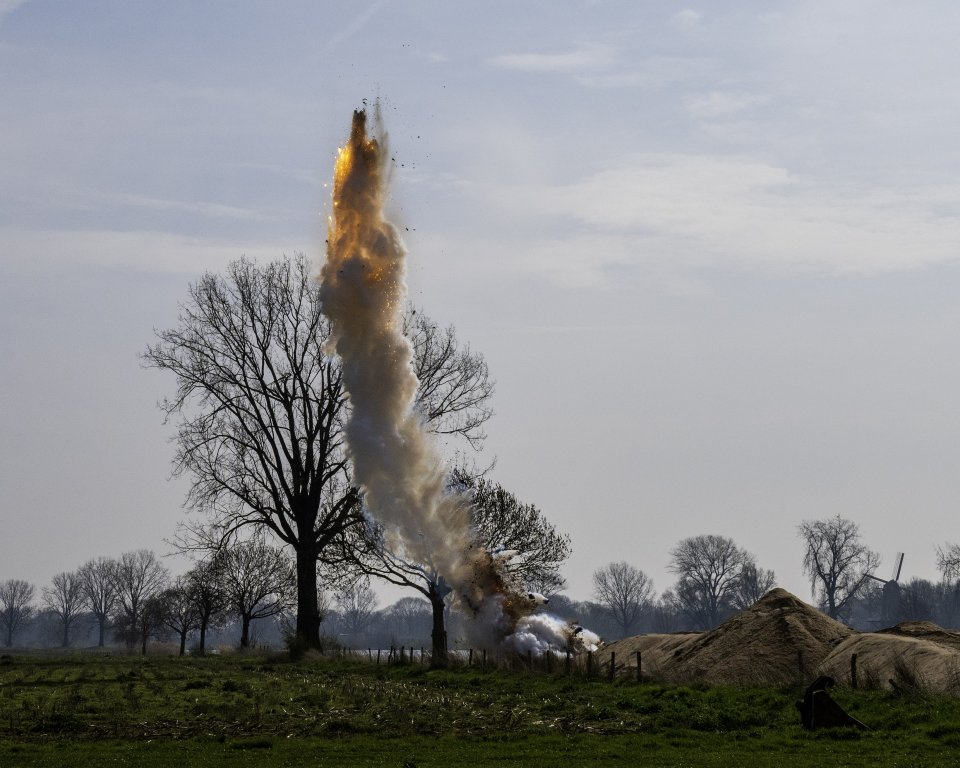
This week, the Defense Explosive Ordnance Disposal Service (EODD) Appeltern a large quantity of World War II munitions on the banks of the Meuse River between Batenburg and Appeltern . The munitions were discovered during dredging operations on the Meuse River and were primarily of British, German, and American manufacture. They included smoke grenades, flare grenades, high-explosive grenades, Panzerfausts, antitank mines, and even an FN Browning pistol.
All ammunition items were destroyed or removed in stages and in a controlled manner by the Explosive Ordnance Disposal Unit.
Dredging
Rijkswaterstaat continuously dredges waterways, such as the Meuse River. In this way, it ensures that there is and remains sufficient draft for shipping. During this work, explosives from World War II are regularly discovered. To ensure safe working conditions, procedures have been established to handle such situations.
Safe
The dredging was carried out by Martens and Van Oord. Among other things, they dredged sections of the Meuse River between Gelderland and North Brabant. They do this using specialized dredging vessels that can safely remove old explosives from the water. Martens and Van Oord is a certified detection company. Any wartime ordnance found is then stored in containers specially designed for that purpose.
The site where the demolition is taking place is owned by Rijkswaterstaat. It has been cordoned off with a wide perimeter, and police are on site to ensure that work can be carried out safely.
Nearly 1,000 explosives
A large amount of material was discovered during dredging operations. The EODD has already destroyed explosives on three previous occasions: in March and May of this year and in December of last year.
In consultation with the EODD, an action plan was drawn up for each destruction operation. The EODD destroyed or removed the munitions in stages and in a controlled manner. In total, this involved nearly 1,000 munitions, including artillery shells, antitank mines, antipersonnel mines, phosphorus grenades, hand grenades, and rockets. The munitions had not been fired and were mostly found in their original packaging materials
The Defense Explosive Ordnance Disposal Service clears explosives approximately 2,500 times a year. These include conventional explosives, primarily from World War II, and improvised explosive devices.